Logistics hubs Public & high-footfall
Ductwork, Ventilation and Fire Safety Services for Logistics Hubs
Duct cleaning, canteen extract, AHU servicing and fire-damper testing for logistics hubs and fulfilment centres.
Logistics hubs Public & high-footfall
Duct cleaning, canteen extract, AHU servicing and fire-damper testing for logistics hubs and fulfilment centres.
Logistics hubs rely on stable airflow, clean ductwork and dependable fire-safety systems. Large indoor spaces, constant vehicle movement and long operating hours create heavy ventilation demands, and air quality affects staff comfort, equipment reliability and overall site safety.
Clean Ducts supports major distribution operators, parcel firms, e-commerce fulfilment centres and FM providers across London and the Home Counties. You receive documented ductwork cleaning, AHU servicing, ventilation checks, kitchen-extract cleaning for staff canteens and fire-damper testing. Logistics sites gather airborne dust faster than most commercial buildings because of the continuous movement of goods, forklifts and vehicles, so if your hub runs multiple shifts or operates around the clock, schedule system inspections at least every 12 months.
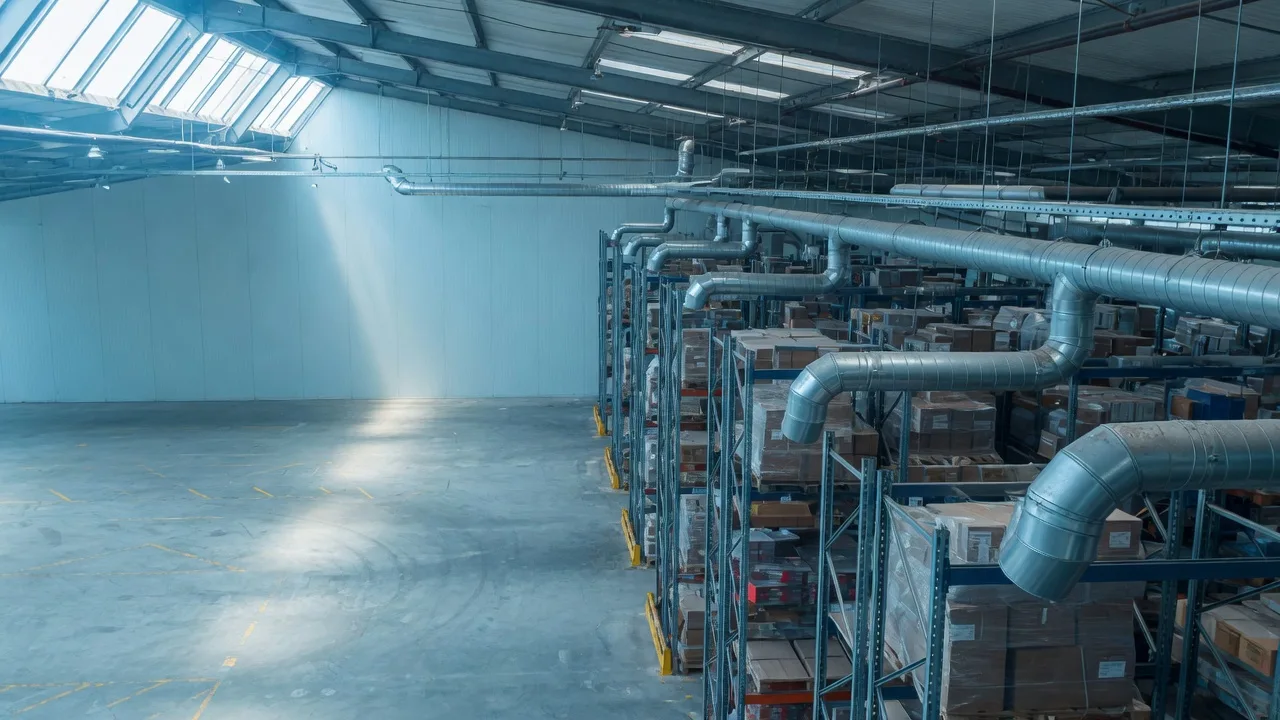
Large logistics buildings behave differently from offices or retail spaces. High ceilings, open bays, heated equipment and vehicle access all influence airflow. Typical challenges include:
Airflow problems in logistics facilities spread quickly because most zones connect through large open spaces. Clean Ducts supports logistics hubs across London, Hertfordshire, Essex, Kent, Surrey, Berkshire and Buckinghamshire.
Dust build-up is the most common issue in logistics hubs. Services include:
Cleaner ducts reduce airborne particles and keep staff areas more comfortable.
Large sites often run catering facilities for staff. We provide:
Busy canteens with daily service need scheduled extract cleaning based on grease load and usage.
Large hubs depend on AHUs to manage temperature and airflow across wide open areas. Services include:
Energy use rises when filters clog or airflow routes are restricted, so routine servicing protects both compliance and running costs.
Fire safety is critical in large-volume buildings where smoke spreads quickly. We provide:
Damaged or stuck dampers create major risk in multi-level logistics hubs, so regular testing removes a high-risk blind spot.
Many logistics sites include extra controlled areas. For these we provide:
Logistics operators rely on accurate evidence, because safety, compliance and staff wellbeing all depend on it.
Logistics hubs must follow workplace-ventilation law, food-service rules for staff canteens and fire-safety expectations. Key obligations include:
Large logistics sites often undergo regular external audits, so clear documentation is essential.
If staff report dust build-up or temperature swings, ventilation routes need urgent attention.
Do you work during night shifts or downtime? Yes. We schedule around your operational windows.
Can you support multi-building logistics campuses? Yes. We provide standardised reporting across all sites.
Do you clean both general ductwork and canteen extract systems? Yes. We support all ventilation routes within logistics hubs.
Are reports suitable for audits and insurer reviews? Yes. All work includes photographic support and condition scoring.
If your hub runs multiple shifts or continuous operations, a ventilation survey confirms whether your ductwork, canteen extract and fire dampers are performing to specification. Request a survey and we will scope the ductwork, ventilation and fire-damper testing your site needs.
Request a free survey. A named engineer walks the system and puts what’s compliant, and what isn’t, in writing within 24 hours.